


Buying land in Greece can be an attractive option for anyone dreaming of building a home, creating a holiday property or investing for the future. In some areas, purchasing a plot can also offer more flexibility than buying an existing house.
But buying land is very different from buying a finished property.
A beautiful plot with sea views, road access and nearby houses does not automatically mean that you can build the home you have in mind. Building rights in Greece depend on several factors, including the location of the land, planning rules, road access, plot boundaries and possible environmental or archaeological restrictions.
For this reason, one of the most important rules when buying land in Greece is simple: check what can legally be built before you buy, not afterwards.
Here are the main things foreign buyers should understand before purchasing land in Greece.
Can Foreigners Buy Land in Greece?
In general, foreigners can purchase land and other real estate in Greece. The buying process is similar to purchasing an apartment or house and normally involves legal, tax and registration procedures.
However, additional restrictions can apply to certain properties in designated border areas, particularly for some non-EU buyers. Because these rules depend on the buyer and location, they should be checked before proceeding with a purchase.
If you are unfamiliar with the general purchasing process, start with our Buying Property in Greece: A Complete Guide for Foreign Buyers.
Not Every Plot Is a Building Plot
This is probably the most important distinction to understand.
Land advertised for sale may be located:
- within an approved town or settlement plan,
- within the boundaries of a village or settlement, or
- outside the planning boundaries.
These categories can be subject to very different building rules.
A plot that appears large enough for a house is not necessarily buildable. Local planning regulations, its legal status, access to a recognised road and other restrictions can all affect what — if anything — may be constructed.
This is particularly important with inexpensive rural plots outside established settlements.
Can You Actually Build on the Land?
Before agreeing to buy a plot, ask an engineer to investigate its building potential.
The question should not simply be:
“Is this land buildable?”
A more useful question is:
“What exactly can legally be built on this specific plot today?”
The answer may determine the permitted building area, position of the building, setbacks from boundaries, height and other design limitations.
Planning rules can also differ significantly between locations and are continuing to evolve in Greece. For that reason, information from an old property listing or even a previous owner should never replace a current technical assessment. Greece is actively updating planning rules concerning settlements and development outside planned areas.
Road Access Matters
Road access can be much more important than it first appears.
A dirt road leading to a property does not necessarily have the same legal status as a recognised public road. This can become particularly important for land outside established planning areas.
Greece has been working on formally recording and recognising road networks in such areas, precisely because road status can affect planning and building rights.
An engineer should therefore check not only whether you can physically reach the property, but also the legal status of its access.
Check the Plot Boundaries
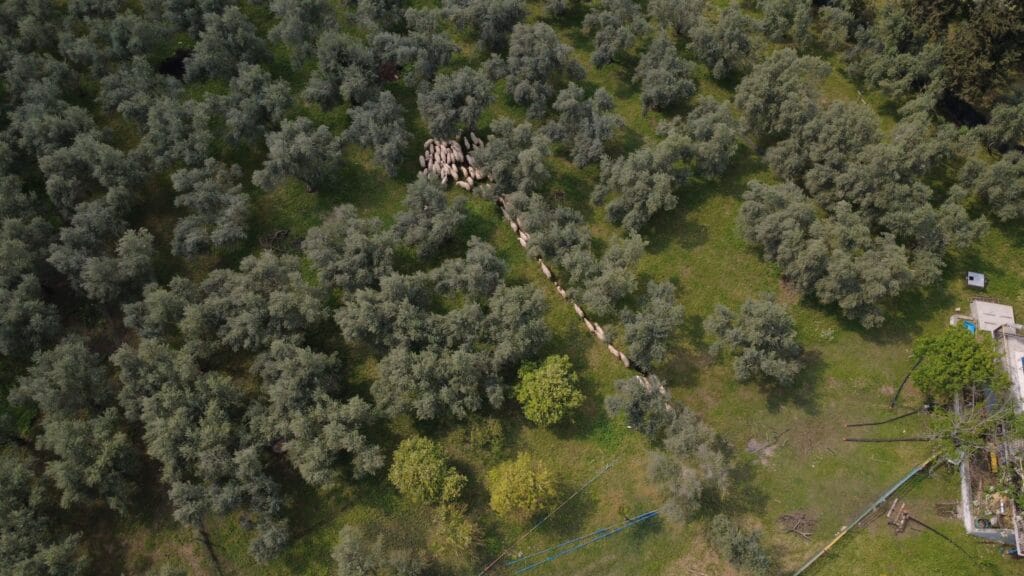
The fence, olive trees or stone wall you see during a viewing should not automatically be assumed to represent the legal boundaries of the property.
Before buying, the property’s survey and cadastral information should be checked carefully.
The Hellenic Cadastre maintains cadastral records and digital mapping tools, while engineers can access cadastral information and submit official diagrams electronically.
This becomes especially important when buying older properties or land in rural areas where boundaries may have been informally understood for many years.
Check for Forest and Archaeological Restrictions
Greece has a rich natural and archaeological landscape, and this can affect what can be done with certain plots of land.
Before purchasing, it is important to check whether any part of the property is affected by forest regulations, protected areas or archaeological restrictions. These issues do not automatically make a property unsuitable, but they may limit development or require additional approvals.
This is another reason why a low price alone should never determine whether a plot is a good opportunity.
Water, Electricity and Other Utilities
A plot may be buildable but still be expensive or complicated to develop if basic infrastructure is not easily accessible.
Before buying, check the availability of:
- electricity,
- water supply,
- sewage or wastewater solutions,
- telecommunications and internet access,
- practical vehicle access to the property.
Do not assume that utilities can simply be connected because neighbouring houses have them.
The distance from existing networks and the characteristics of the location can affect both the cost and complexity of bringing services to a new property.
Why an Engineer Is Essential Before You Buy
When buying an apartment, buyers often think first about the lawyer and notary.
When buying land in Greece, an engineer is equally important.
A qualified engineer can investigate the technical characteristics of the plot and help determine whether your plans are realistic before you commit to the purchase.
Depending on the property, this may include checking its boundaries, planning status, road access, building rights and possible restrictions.
Ideally, this investigation should happen before paying a substantial deposit or signing an agreement that commits you to the purchase.
A plot should not be chosen simply because an estate agent or seller says that it is suitable for building.
Costs Beyond the Price of the Land
The advertised price of the land is only part of the total budget.
Buyers should also allow for the professional and transaction costs involved in purchasing property, as well as technical surveys and other checks that may be necessary for the particular plot.
We explain the main purchase-related expenses separately in our guide to How Much Does It Cost to Buy Property in Greece?
If your intention is to build afterwards, remember that the construction budget is a completely separate calculation. Architectural design, permits, engineering, utility connections, site preparation and construction can significantly change the overall cost of the project.
We will cover the process of building a house in Greece in a separate guide.
Questions to Ask Before Making an Offer
When buying land in Greece, a few simple questions can help you identify potential problems before making an offer:
- What is the exact legal area of the plot?
- Where are its official boundaries?
- Is the land currently buildable?
- What type and size of building can be constructed?
- Does it have legally recognised road access?
- Are there forest, archaeological or environmental restrictions?
- Are water and electricity available nearby?
- Are there any ownership, cadastral or title issues?
- Has an independent engineer checked the property?
- What additional costs should be expected before construction can begin?
If any of these answers are unclear, investigate further before committing to the purchase.
Final Thoughts
Buying land in Greece can give you the opportunity to create a property that suits your needs rather than adapting to an existing home.
But the attractive view, location and asking price are only the beginning.
The real value of a plot depends on what you can legally and practically do with it.
For foreign buyers, the safest approach is to combine legal due diligence with an independent technical assessment before making a final commitment. Spending time on these checks before purchasing can prevent much larger problems later.
If building your own home is the goal, the next step is understanding the planning, permit and construction process — a topic we will explore separately in our upcoming guide to building a house in Greece.
Disclaimer: This article is for general informational purposes only and does not constitute legal, tax, financial or investment advice. Rules and requirements may change, so always verify current information with the relevant authorities or a qualified professional.



Pingback: Cost to Build a House in Greece in 2026: Complete Guide
Pingback: Buying Property in Greece as a Foreigner: My Experience
Pingback: EU Funding for Tourism in Greece: 9 Essential Rules