

The cost of owning a home in Greece goes beyond the purchase price. Once you have the keys, there are electricity bills, annual property tax, water charges, building fees and occasional repairs to think about.
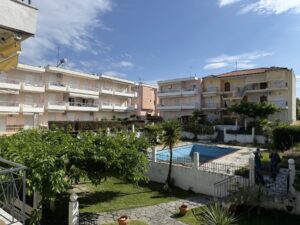
When I bought my apartment in Kallithea, Halkidiki, I wanted to understand what ownership would actually cost beyond the purchase price. Some expenses are predictable. Others change with how much you use the property, the services in your building and the work needed to keep everything in good condition.
In this article, I share the figures I currently use to budget for my approximately 40 m² apartment, explain what is included in a Greek electricity bill, and look at the expenses worth checking before buying a home.
These are figures from one property, alongside selected local tariffs for 2026. They are a practical example rather than an average for Greece, and the budget is incomplete where I do not yet have confirmed costs.
My cost of owning a home in Greece: a Kallithea example
Here is the starting point for my own budget:
| Expense | Amount | Basis |
|---|---|---|
| ENFIA property tax | €73.26 per year | My 2026 tax assessment |
| Building maintenance contribution | €200 per year | My current annual contribution |
| Electricity bills, including other charges | Approximately €516 per year | My average of €43 per month, multiplied by 12 |
| Subtotal for these three items | Approximately €789.26 per year | Excludes the items below |
| Prepaid mobile internet | €20 per package activation | The Cosmote offer I personally use; annual cost depends on activations |
| Water and sewerage | Not yet confirmed | Excluded from the subtotal |
| Repairs, servicing and insurance | Not included | Add actual spending or quotes separately |
The distinction matters: €789.26 is a partial annual budget, not the total cost of running the apartment. The electricity figure is an estimate based on my average, while the ENFIA figure comes from my 2026 assessment.
I would also separate everyday ownership expenses from mortgage payments, furnishing, renovation and the costs of renting the property to guests. Each can change the budget substantially.
1. Annual property tax: ENFIA
ENFIA is Greece’s annual property ownership tax. The assessment is based on the rights held on 1 January and the property information recorded in the E9 declaration.
The calculation considers characteristics such as location, area, use, age, floor and number of facades. It is not simply a fixed percentage of the price you paid for the property. The Greek Ministry of National Economy and Finance explains the main ENFIA principles here.
For my Kallithea apartment, the final ENFIA assessment for 2026 is €73.26. That is my own result, including the reduction shown on the assessment; it should not be used to predict the tax on another apartment or house.
Before buying, ask for the property’s recent assessment and check the declared details. After buying, confirm that the E9 record accurately reflects your ownership. You can review declarations and tax assessments through the AADE E9/ENFIA service.
For more detail, see our related article, Annual Property Taxes in Greece: What Foreign Owners Need to Know.
2. Electricity: the bill includes more than electricity
My electricity bills average around €43 per month. Some months are closer to €25, while others are considerably higher.
One useful example is my bill for 20 November to 20 December 2025. It recorded only 24 kWh of consumption, but the total payable was €24.71:
| Component | Amount |
|---|---|
| Electricity consumed | €2.52 |
| Supplier’s fixed fee | €7.90 |
| Regulated charges | €4.98 |
| Taxes and additional levies | €1.06 |
| Municipal charges | €8.25 |
| Total | €24.71 |
The municipal section included ΔΤ, ΔΦ and ΤΑΠ. The ERT public broadcasting line was present but showed €0 on this particular bill.
This illustrates why a low consumption month can still produce a noticeable bill. Looking only at the price per kWh misses the fixed fee and the other components.
For budgeting, I include the entire bill in my €43 monthly average. I do not add the municipal charges again as a separate annual expense.
Choosing an electricity supplier
Supplier tariffs deserve comparison. Look at the energy price, fixed fee, whether the tariff is fixed or variable, and any conditions attached to discounts or leaving the contract.
RAAEY, Greece’s energy regulator, provides the EnergyCost comparison tool for electricity and gas products. Compare an offer using your likely consumption rather than its headline price alone.
For a holiday apartment, a sensible starting point is to keep twelve months of bills. This helps you see both quieter months and periods when air conditioning, heating or hot water increase spending.
3. Water and sewerage: check the local tariff
I have not yet confirmed my own water bill, so I have left it out of my personal subtotal. There is, however, a published local tariff we can use to explain the structure.
The Municipality of Kassandra’s 2026 water and sewerage decision lists these domestic charges:
| Item | Published tariff |
|---|---|
| Annual fixed water fee | €45 |
| Water consumption category: 0–100 m³ annually | €0.45 per m³ |
| Water consumption category: 101–150 m³ annually | €0.60 per m³ |
| Water consumption category: 151–200 m³ annually | €0.80 per m³ |
| Annual sewerage fee for a connected property | €80 |
| Annual fee listed for a property not connected to sewerage | €20 |
There are higher water consumption categories, plus sewerage usage charges. The property’s connection status and actual billing details need confirmation before calculating a personal total. These are Kassandra tariffs, not nationwide prices.
The municipality also explains that a new owner should report the ownership change and update the billing address. Its water service information page describes the process.
A missing bill is something to investigate. Check whose name the connection is registered under, where bills are sent, and whether there is an individual meter or a shared arrangement in the building.
4. Building fees: what does your contribution cover?
Apartment owners also need to understand the building’s shared expenses, often referred to as κοινόχρηστα.
Depending on the building, the budget may cover cleaning, shared lighting, garden care, lift servicing and other common services. Larger works can require separate contributions.
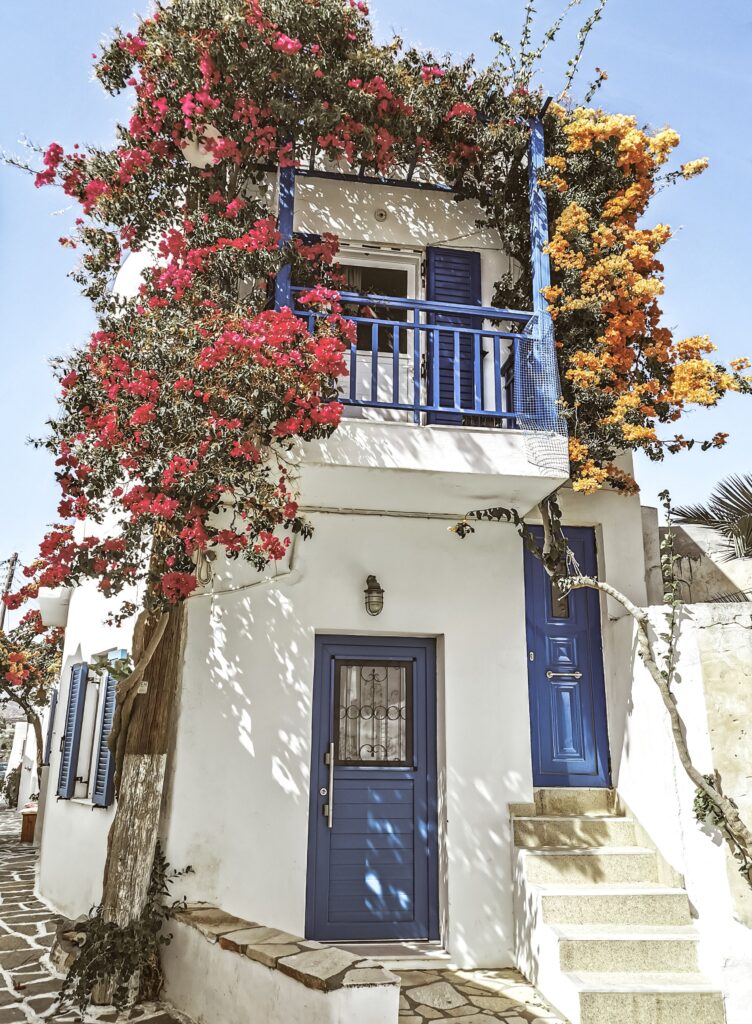
I currently pay €200 per year towards building maintenance. Personally, I think that is a small budget, and I would prefer a higher contribution if it allowed more consistent maintenance and better care of the common areas.
A low annual fee is only useful information when you know what it covers. Ask whether the building has a reserve for repairs and whether any work is planned. A small regular contribution does not tell you what a future roof, facade or lift project might cost.
Useful questions before buying include:
- What services are included in the regular contribution?
- How are costs divided between apartments?
- Is there money set aside for larger repairs?
- Are any contributions unpaid or major projects awaiting a decision?
- Can I see the recent accounts and meeting minutes?
5. How is an apartment building managed?
Owning an apartment also means taking part in decisions about shared property.
Two useful terms are διαχειριστής, the building manager, and κανονισμός πολυκατοικίας, the building regulation. Ask for the regulation and the cost allocation documents before buying.
Article 4 of Law 3741/1929 allows owners, through unanimous agreement, to establish shared rights, obligations, meetings and decision majorities that vary with the importance of the issue. Without such a regulation, it provides for unanimous appointment of a manager.
The notice, quorum, voting and representation requirements therefore need checking against the building’s documents and applicable law. Do not assume a simple majority applies to every decision.
For an owner living abroad, ask how notices are delivered, how you can be represented, and how decisions and expenditure are recorded. We will explore meetings, management and owners’ rights in a separate article.
6. Internet: my prepaid approach
I use a Cosmote prepaid mobile data package through a SIM card. The offer I personally use costs €20 per activation and provides unlimited data under that offer’s terms.
This is my own package experience, not a guarantee that the same offer will be available to every customer. Check its validity period, eligibility and current conditions before choosing it.
For the annual budget, multiply the cost by the number of packages you actually activate. I have not assumed twelve activations in my table.
My experience with mobile internet in Kallithea has not always been ideal. Before committing to it, test the connection inside the apartment, including at busy times. If you need a more dependable connection for work, investigate fixed broadband at the exact address and check the available technology, speed and contract duration.
7. Repairs, insurance and looking after an empty home
Keep a separate line in the budget for servicing and repairs. Air conditioning, water heaters, plumbing, appliances and windows can all need attention, even in a renovated apartment.
I would distinguish routine servicing from major work. Record what you actually spend, and use quotes for known upcoming repairs rather than inventing a precise annual allowance.
Insurance is another item to price separately. Review the cover offered for the building, contents and relevant risks, along with exclusions and deductibles. Confirm that the policy fits how the property is used, particularly if it is left empty for long periods or rented out.
When you live abroad, it also helps to have someone who can check the property and arrange access if a problem occurs. Any paid inspections, cleaning or management should appear in the budget.
Apartment or detached house: a different maintenance budget
In an apartment building, certain expenses are shared. With a detached house, you need to budget directly for the roof, external walls, garden, gates and other features belonging to the property.
A house with a pool, landscaped grounds or extensive outdoor areas needs a different budget from my small apartment. Compare the maintenance responsibilities as carefully as the floor area and purchase price.
What I would check before buying
Ask for recent electricity and water bills, the latest ENFIA assessment, the building regulation, shared expense accounts and information about planned repairs.
Then build a budget around your intended use: occasional holidays, longer stays, year-round living or rental activity. Separate fixed commitments, consumption, and occasional larger expenses.
My own partial budget is approximately €789 per year for ENFIA, building maintenance and electricity bills. Internet, water, repairs and any insurance remain additional items. That is a useful starting point for understanding one small apartment in Halkidiki, but the full picture depends on the specific home and how it is looked after.
The question I would ask before purchasing is: what does it take to keep this particular property in good condition throughout the year?