

Whether you are moving to Greece, spending several months there or simply visiting for a holiday, it is useful to understand how the Greek healthcare system works.
Greece has both public and private healthcare services, and what you can access — and what you may have to pay — depends largely on your insurance status and the reason for your stay.
Here are the basics foreigners should know.
Public and Private Healthcare in Greece
Greece has a national public healthcare system known as ESY, alongside a large private healthcare sector.
Public healthcare is provided through hospitals, health centers and other public facilities. The system also includes private doctors, clinics and diagnostic centers that have contracts with EOPYY, Greece’s National Organization for Healthcare Services Provision.
Private doctors and clinics are widely used as well, particularly by people who want faster appointments or prefer a specific specialist.
This means that seeing a private doctor does not necessarily mean the visit is covered by the public system. It is always worth checking whether the provider works with EOPYY or whether you will be paying privately.

Evangelismos Hospital in Athens. Photo: Kritheus / Wikimedia Commons, CC BY-SA 4.0.
Healthcare for EU Visitors
If you are insured under the public healthcare system of an EU or EEA country or Switzerland and are visiting Greece temporarily, the European Health Insurance Card (EHIC) can give you access to medically necessary state-provided healthcare.
Treatment is provided under the same conditions and at the same cost that applies to people insured in Greece.
You should normally present your EHIC together with an ID card or passport when receiving treatment.
However, the EHIC is not a replacement for travel insurance. It does not cover private healthcare or costs such as repatriation to your home country.
What About Non-EU Visitors?
Visitors from countries outside the EU/EEA and Switzerland should not assume that they are covered by the EHIC system.
Healthcare coverage will depend on their own insurance, any applicable agreements and their individual circumstances.
For short visits, having suitable travel medical insurance is therefore particularly important. If you use private healthcare without applicable insurance coverage, you will generally need to pay the costs yourself.
Moving to Greece
Healthcare becomes a little different if you are moving to Greece rather than visiting temporarily.
People who work and are insured in Greece generally enter the Greek social security system. EU citizens moving to Greece may have different arrangements depending on whether they work in Greece, remain insured in another EU country, receive a pension or fall into another category.
For some EU residents, an S1 form issued by another country’s statutory health insurance system can be used to establish healthcare rights in Greece.
Because the rules depend on your employment, residence and insurance status, it is worth confirming your access to healthcare in Greece before moving.
Pharmacies in Greece
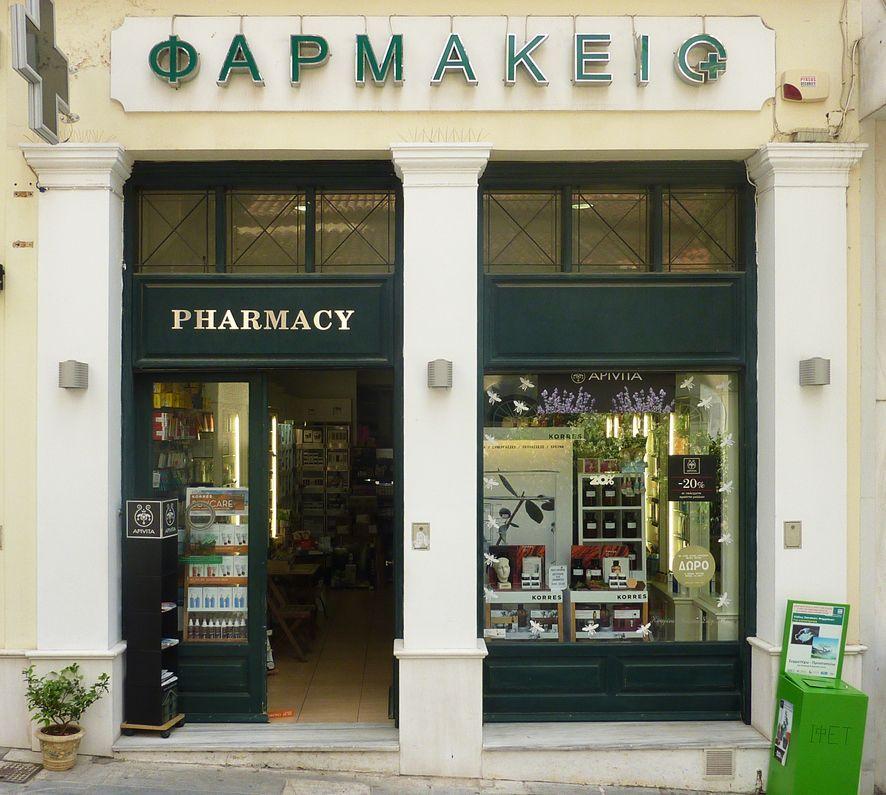
Pharmacies are easy to recognize by the green cross signs found throughout Greek towns and cities.
They are often the first place people turn for advice about minor health problems, medicines and whether a doctor’s visit may be necessary.
Opening hours vary, but duty pharmacies operate outside normal opening hours, including nights, weekends and public holidays.
If you take regular prescription medication, it is sensible to bring enough for your trip and keep information about the medication and prescription with you.
What to Do in an Emergency
For a medical emergency in Greece, you can call 112, the European emergency number.
You can also call 166 for EKAB, Greece’s National Centre for Emergency Care.
Emergency ambulance transportation provided by EKAB to a public hospital is generally provided without charge. Private ambulance services are different and may involve additional costs.
If the situation is serious, do not spend time trying to work out which type of hospital or insurance arrangement applies — contact the emergency services first.
Should Foreigners Have Private Health Insurance?
That depends on how long you are staying and what healthcare coverage you already have.
For a short holiday, appropriate travel insurance may be enough. Someone moving permanently or spending long periods in Greece may want more comprehensive coverage, particularly if they expect to use private hospitals and specialists.
The important point is to understand what your existing insurance actually covers before you need medical treatment.
Final Thoughts
Healthcare in Greece is accessible through a mixture of public hospitals, health centers, contracted providers and private medical services.
For foreigners, the biggest difference is usually not nationality itself but insurance and residency status.
Before travelling or moving to Greece, check what healthcare rights you have, carry the relevant documents and make sure you understand when additional travel or private insurance may be useful.
A little preparation can make dealing with an unexpected health problem in Greece considerably easier.





Pingback: Renting a Home in Greece: Essential Guide for Foreigners