

Driving in Greece is one of the best ways to explore the country beyond its major cities and most popular tourist centers. Having a car gives you the freedom to reach small villages, remote beaches, mountain roads and coastal areas that can be difficult to experience using public transport alone.
For most visitors, driving in Greece is relatively straightforward. The main motorways are modern, road signs are generally easy to follow, and major destinations are well connected. Once you leave the highways, however, the experience can change quickly — roads may become narrower, parking more challenging and driving styles a little less predictable.
There are also practical things worth knowing before getting behind the wheel, including toll roads, speed limits, fuel stations, parking and the documents you need to drive legally.
Whether you are renting a car for a few days or planning a longer Greek road trip, knowing what to expect can make the journey considerably easier.
Is Driving in Greece Easy?
For experienced drivers, getting around Greece by car is generally quite easy. The motorway network connecting Athens, Thessaloniki and many major regional destinations is modern and well maintained, making longer journeys relatively comfortable.
Driving becomes more interesting once you leave the main roads. In villages, historic towns and on some islands, streets can be surprisingly narrow, while mountain and coastal routes may include sharp bends and steep sections. Taking your time is usually more important than covering distance quickly.
Traffic is another consideration. Athens and Thessaloniki can be demanding during busy hours, while popular islands and coastal resorts may experience heavy traffic during July and August. Outside the peak season, driving in many parts of Greece can be considerably more relaxed.
A navigation app is useful, but it is worth using some common sense when following it through smaller villages. The shortest route on the screen is not always the road you want to take.
Driving License and Documents
Before driving in Greece, make sure you have the correct documents with you. Drivers from EU and EEA countries can generally use their valid national driving licence in Greece without needing an additional permit.
Visitors from other countries may need an International Driving Permit alongside their national licence, depending on where the licence was issued and the agreements that apply.
If you are renting a car, rental companies may have their own requirements regarding minimum age, how long you have held your licence and the type of payment card required. These conditions can vary between companies, so checking them before booking is worthwhile.
You should also carry the vehicle registration and insurance documents provided with the car. If you are bringing your own vehicle into Greece, check that your insurance provides the necessary coverage before travelling.
Speed Limits and Road Rules
Greek road rules are broadly similar to those elsewhere in Europe. Travelers can check current traffic rules and road-safety requirements through the European Commission’s official road safety information for Greece. Vehicles drive on the right, seat belts are compulsory, and using a handheld mobile phone while driving is prohibited.
Speed limits vary depending on the type of road and vehicle, and signs should always take priority over general limits. Motorways allow higher speeds, while limits drop considerably in towns, villages and residential areas.
Speed cameras and police checks are used throughout the country, so it is worth paying attention even when local traffic appears to be moving faster than the posted limit.
Extra care is advisable on rural and island roads, where you may encounter scooters, cyclists, pedestrians or even animals with little warning.
Toll Roads in Greece
Many of Greece’s major motorways operate with tolls, particularly on longer routes connecting Athens, Thessaloniki and other major destinations. Depending on the journey, you may pass through several separate toll stations rather than paying a single fee for the entire route.
Payment is generally straightforward, with cash and cards accepted at many toll stations. Electronic toll systems are also widely used by frequent drivers.
Toll costs can add up on a long road trip, so it is worth including them when planning your travel budget. The advantage is that Greece’s main motorway network offers some of the fastest and most comfortable driving in the country.
If you leave the motorways and travel on regional roads, you can often avoid tolls, but the journey may take considerably longer.

Fuel Stations and Paying for Fuel
Fuel stations are easy to find around cities, towns and along Greece’s main roads. In more remote areas and on smaller islands, however, it is sensible not to wait until the tank is almost empty before looking for one.
Unlike in many European countries, most Greek fuel stations are serviced. An attendant will usually come to the car, ask what type of fuel you need and how much you would like, then fill the tank for you.
Card payments are widely available, although carrying some cash can still be useful when travelling through smaller or more remote areas.
Fuel prices can vary between locations, with islands and isolated areas sometimes being more expensive because of transportation costs.
Parking in Greece
Parking can be one of the more challenging parts of driving in Greece, particularly in large cities, historic centres and popular coastal destinations during summer.
In Athens and Thessaloniki, street parking may be regulated by local parking zones, while private car parks can often be the easier option. In smaller towns and villages, parking is usually less complicated, although narrow streets can leave surprisingly little space.
During July and August, popular beaches and seaside towns can become especially crowded. Arriving earlier in the day can make a significant difference if you are visiting somewhere with limited parking.
Always pay attention to local signs and restrictions rather than simply following where other cars have parked. A row of parked cars does not necessarily mean that parking there is legal.
Renting a Car in Greece
Renting a car can be one of the easiest ways to explore Greece, particularly if your trip includes beaches, villages or regions with limited public transport.
Major international rental companies operate at airports and in larger cities, while many islands and tourist destinations also have local rental agencies. Prices can vary significantly depending on the season, with demand usually highest during July and August.
Before booking, check what is included in the insurance, the fuel policy, mileage limits and any additional charges. It is also worth checking the car carefully when collecting it and documenting any existing damage.
A smaller car can be a practical choice in Greece. Narrow village streets, tight parking spaces and some island roads can make a compact vehicle considerably easier to live with than a large one.
Driving on Greek Islands
Having a car on a Greek island can give you access to beaches, villages and viewpoints that are difficult to reach by public transport. On larger islands such as Crete, Corfu and Rhodes, a car can be particularly useful if you want to explore beyond the main towns and resorts.
Driving conditions vary considerably between islands. Main roads may be perfectly comfortable, while smaller routes can become narrow, steep or winding, especially when approaching remote beaches and mountain villages.
If you plan to take a rental car on a ferry, check the rental company’s conditions first. Some companies may require prior permission or have specific insurance rules for transporting vehicles between islands.
During the busiest summer weeks, traffic and parking around popular beaches and towns can become much more difficult, so allowing extra time is a good idea.
Is a Road Trip the Best Way to See Greece?
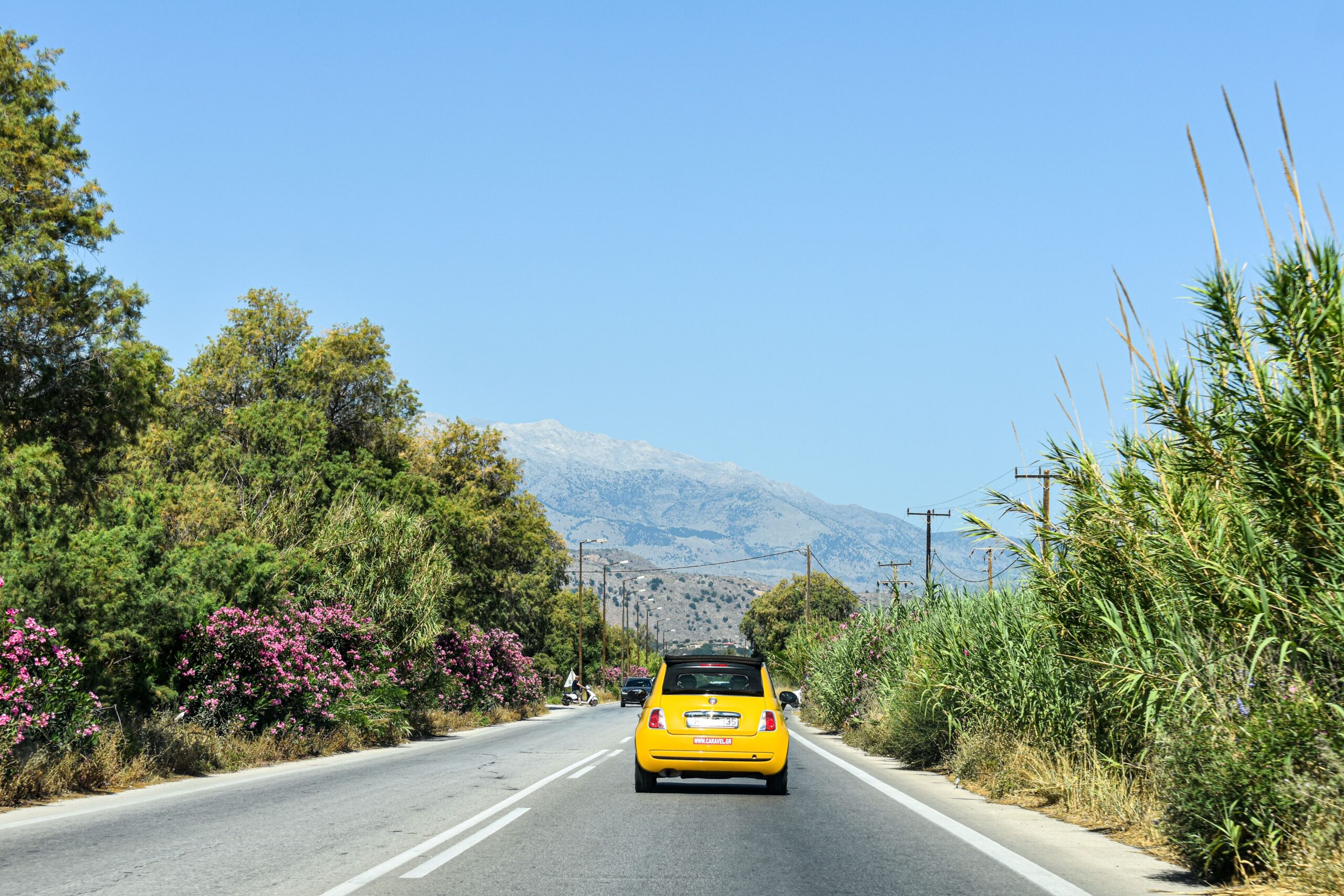
For travellers who want to explore beyond the major cities and famous resorts, travelling by car can be one of the most rewarding ways to experience Greece. It gives you the freedom to change plans, stop in smaller villages and discover beaches and landscapes that are often missed on a more organised trip.
A car is not necessary everywhere. Athens is usually easier to explore without one, and some island holidays may require very little driving. But for regions such as Halkidiki, the Peloponnese, mainland Greece and larger islands, having your own transport can completely change what you are able to see.
The best Greek road trips are rarely about reaching a destination as quickly as possible. Leave some room in the itinerary for the unexpected turn, the small taverna you hadn’t planned to visit or the beach that looked better from the road than it did on the map.




Pingback: Ferries in Greece: What You Need to Know Before You Travel
Pingback: Best Time to Visit Greece: Weather, Crowds & Prices
Pingback: Northern Greece Road Trip: Kastoria, Zagori, Ioannina, Parga & Sivota