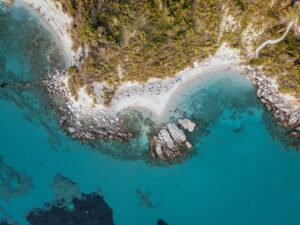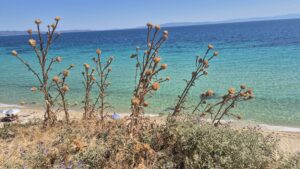

Afytos Halkidiki is one of the most distinctive traditional villages on the Kassandra peninsula. Located on the Kassandra peninsula, just a few kilometres from Kallithea, it combines traditional stone architecture, narrow streets and impressive views over the Aegean Sea.
Unlike many coastal resorts in Halkidiki, Afytos has kept much of its old village character. It is a place where you can spend the morning by the sea, walk through a traditional Greek village in the afternoon and enjoy dinner overlooking the water in the evening.
Explore the Traditional Village
The old centre is the highlight of Afytos.
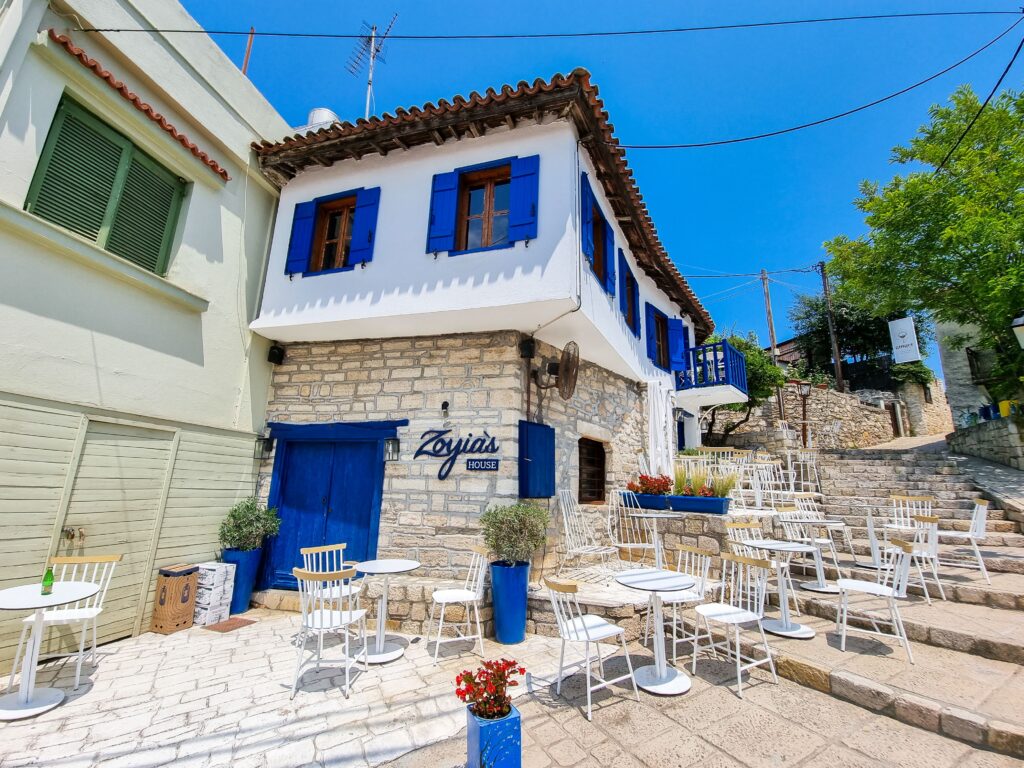
Stone houses, small squares, cobbled streets and traditional tavernas give the village a very different atmosphere from the larger summer resorts nearby.
One of the best ways to experience Afytos is simply to walk around without a strict plan. The centre is compact, and many of its most attractive corners are found along the small streets leading towards the sea.
The Church of Agios Dimitrios, located in the central square, is one of the village’s best-known landmarks.
Enjoy the View Over the Aegean
Afytos is built on elevated ground above the coast, which gives parts of the village excellent views over the Toroneos Gulf.
Along the edge of the village you will find cafés, restaurants and viewpoints overlooking the sea.
This is particularly enjoyable in the late afternoon and evening, when the temperature drops and the village becomes livelier.
Beaches in Afytos: Varkes and Liosi
Afytos has several sections of coastline rather than one single beach. Two names you will often come across are Varkes Beach and Liosi Beach.
Varkes is one of the better-known beach areas below the village, with clear, relatively shallow water and both organized and quieter sections.
Liosi stretches along the coast in the direction of Kallithea and generally has a more relaxed feel. Parts of the seabed can be rocky, so the experience can vary depending on where you enter the water.
Other names, including Moudounou, Afytis, Aristotelis and Valopetres, are also used for different sections of the coastline around Afytos.
Keep in mind that the historic village sits above the coast. Walking down to the sea is easy enough, but the climb back up can feel very different in the summer heat. A car can therefore be useful if your accommodation is in the upper part of Afytos.
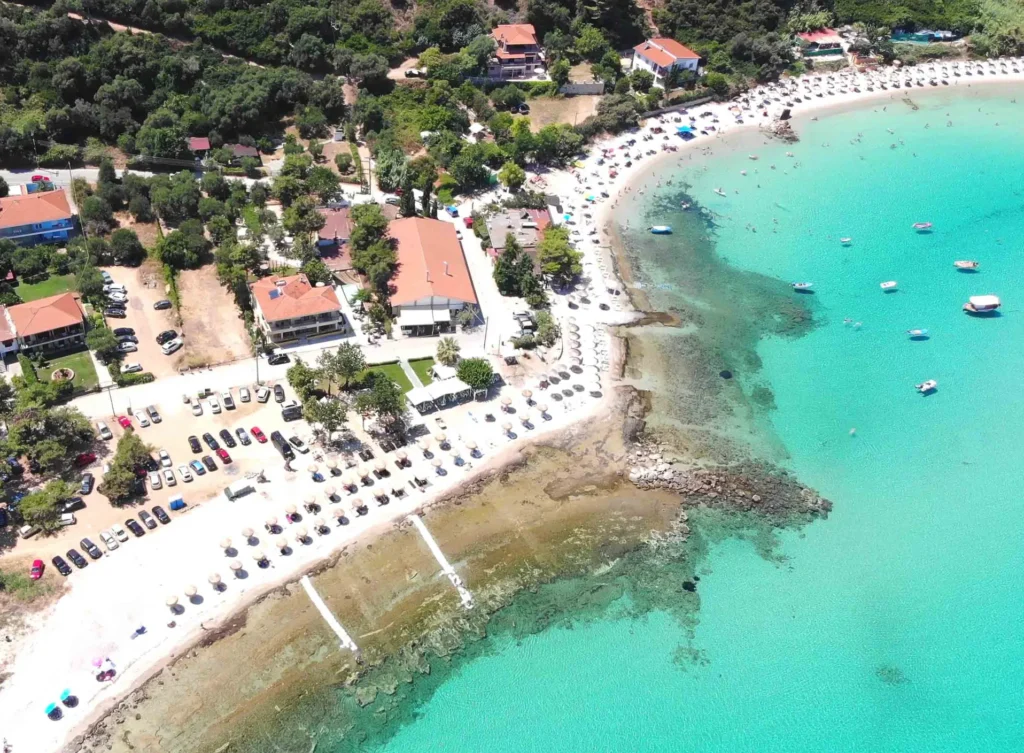
Photo source: www.halkidikeys.com
What to Do in Afytos
Afytos Halkidiki works particularly well for travellers who prefer a slower pace rather than a long list of attractions.
Spend some time exploring the old streets, stop for coffee with a sea view, head down to the beach and return to the village for dinner in the evening.
It is also a convenient base for exploring other parts of Kassandra.
Afytos or Kallithea?
Although Afytos and Kallithea are very close to each other, they offer quite different experiences.
Afytos is smaller, more traditional and known for its stone architecture and relaxed atmosphere. Kallithea is busier, with more shops, nightlife and a stronger summer-resort feel.
Because they are only a short drive apart, you do not necessarily have to choose between them. Staying in one and visiting the other is easy.
Getting to Afytos
Afytos is located on the eastern side of Kassandra, approximately 75 kilometres from Thessaloniki International Airport.
Driving is the easiest option if you also plan to explore Halkidiki. During the busy summer months, however, traffic on the main road into Kassandra can increase significantly, particularly around weekends.
Is Afytos Worth Visiting?
Afytos Halkidiki is definitely worth visiting, especially if you want to experience a more traditional side of Kassandra.
The combination of traditional architecture, sea views, beaches and a compact village centre makes Afytos an easy place to include in a Kassandra trip.
You can visit for a few hours, spend an evening there or use the village as a base for a longer holiday. Either way, it offers something noticeably different from the larger resorts nearby.
Photo Credits
Featured image: Marco Verch / CC BY 2.0